

Embedding authorship, origin, and value directly into every handmade piece
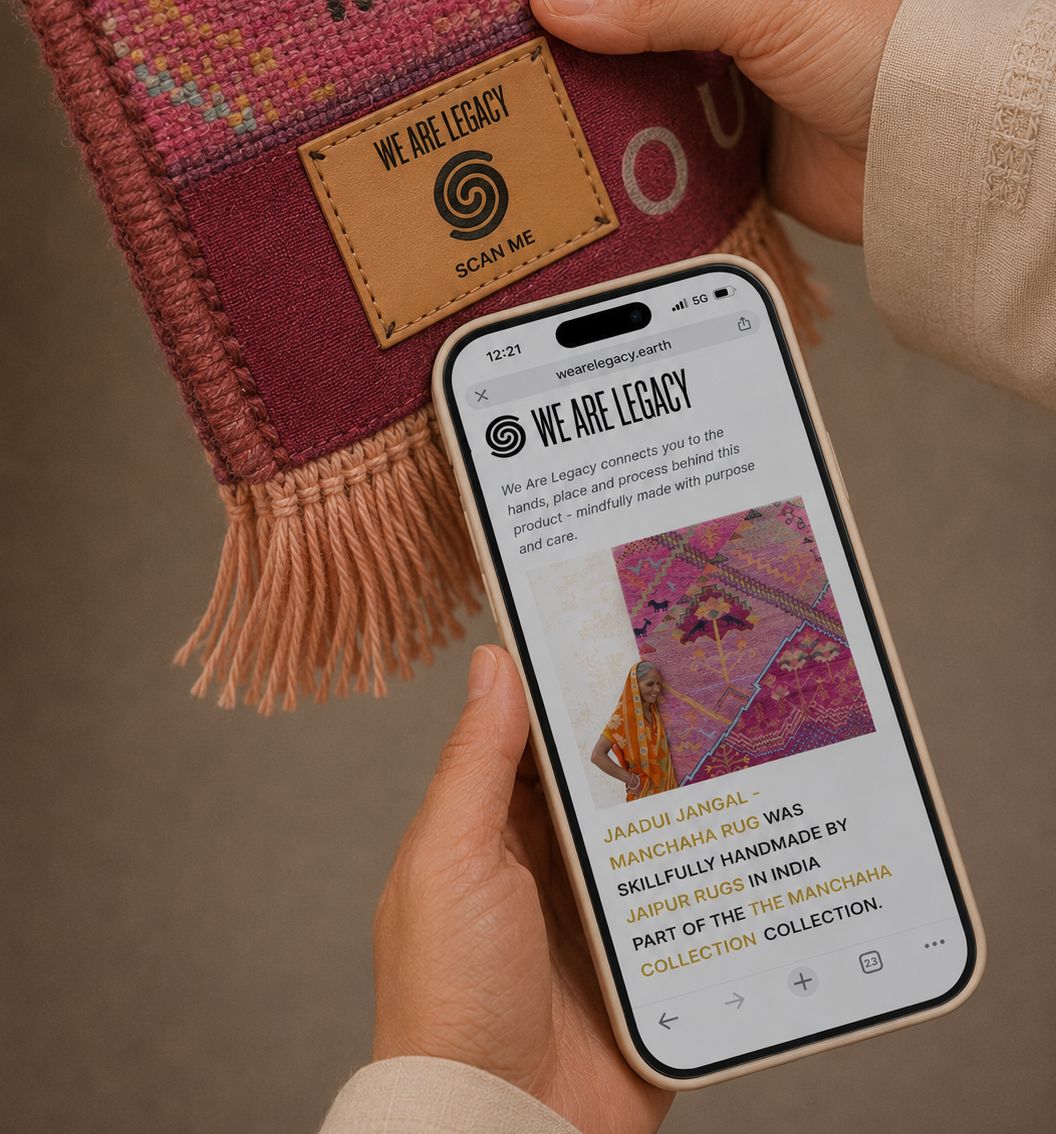
A handmade rug from Jaipur Rugs connected to its digital identity through We Are Legacy, revealing the maker, materials, process, and provenance behind the piece.
We Are Legacy places the human hand back at the centre of value creation, making the makers, knowledge, and stories behind handmade products visible and recognised.
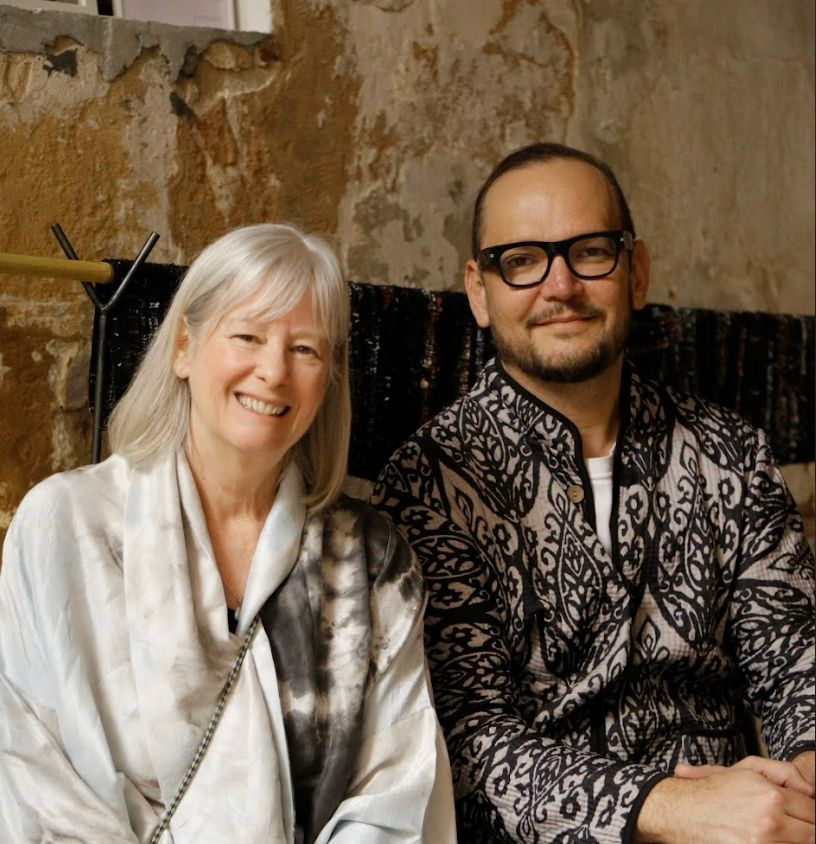
We Are Legacy co-founders Lesley Pennington and Robert Meeder, leading a new initiative that connects handmade products to their makers, materials, and stories through digital identity.
A new digital identity platform makes the people, processes, and value behind handmade products visible with a simple tap
Embedding authorship, provenance, and value directly into handmade products through a new digital identity system.
We Are Legacy, a new platform operating at the intersection of craft, technology, and cultural value, has launched a digital identity system designed to make the people, processes, and stories behind handmade products visible, verifiable, and accessible.
Recently launched at XTANT in Mallorca, one of Europe's leading gatherings dedicated to textile heritage, craftsmanship, and contemporary design, the initiative introduces a Digital Product Identity that connects every handmade object directly to its maker, materials, production journey, and impact.
Founded by Lesley Pennington, Robert Meeder, and Ma Steinsvik, We Are Legacy was created in response to a growing challenge facing the global handmade sector: while consumers increasingly seek authenticity, transparency, and meaningful connection with the products they buy, much of the labour, knowledge, and cultural value embedded within handmade work remains invisible once products enter the marketplace.
Through a simple tap using NFC technology, each product reveals a structured digital record containing information about its materials, maker, process, production context, value distribution, and impact. Rather than adding a layer of marketing or storytelling, the system embeds identity directly into the object itself, creating a lasting connection between maker, product, and owner.
"For too long, the work of the hand has been undervalued because it has been invisible," says Lesley Pennington, CEO of We Are Legacy. "This is about redefining how value is understood by placing artisans at the centre and making their work visible, trusted, and recognised. Handmade products represent knowledge, care, culture, and time. When that becomes visible, value can be understood differently."
The launch includes an international pilot bringing together ten studios from India, South Africa, Laos, Guatemala, Armenia, and Sri Lanka: Morii, Paiwand Studios, Aikyamatya Luxury, RaasLeela, Jaipur Rugs, Frances VH Mohair, Lao Textiles by Carol Cassidy, Que Onda Vos, The Rug Code, and Sonali Dharmawardena.
Together, these studios are exploring how digital identity can strengthen visibility, trust, provenance, and market access without compromising cultural integrity or traditional knowledge. At XTANT, visitors were able to interact directly with the products and their digital identities, discovering the people, materials, and production journeys behind each piece.
"In handmade work, as in art, the value lies in knowing who made it and why," says Frances van Hasselt of Frances VH Mohair. "These digital identities ensure that the provenance, intention, and people behind each piece are never lost, giving everyone involved a voice and a way to be seen."
The initiative arrives at a time when transparency and traceability are becoming increasingly important across global supply chains. While We Are Legacy can align with emerging frameworks such as the Digital Product Passport, its primary focus is not compliance. Instead, it seeks to ensure that authorship, human labour, cultural knowledge, and production context remain visible within increasingly digital and automated economies.
The significance extends beyond individual products. Handmade production supports millions of livelihoods worldwide and remains one of the most important sources of income across many developing economies. According to UNESCO, cultural and creative industries account for approximately 3 percent of global GDP and employ more than 30 million people worldwide. Across Asia, Africa, and Latin America, craft-based production continues to preserve cultural heritage while creating economic opportunities, particularly for women and home-based producers.
As consumers become more conscious of where products come from and how they are made, We Are Legacy introduces a new model in which information is no longer external to the product but embedded within it. By connecting products directly to the people and processes behind them, the platform helps strengthen trust, improve recognition, and create a clearer understanding of how value is generated across handmade supply chains.
The platform is currently expanding its network of participating studios while continuing to refine its onboarding processes, data structure, and verification methods. Future development will focus on improving scalability, strengthening data integrity, and supporting additional craft sectors and geographies.
We Are Legacy proposes a shift from anonymous production to visible authorship. By giving handmade products a digital identity, the platform ensures that the makers, materials, knowledge, and cultures behind them are no longer hidden, but recognised as an essential part of the product's value.
KDL
email us here
Peter Harris
Visit us on social media:
LinkedIn
Instagram
Legal Disclaimer:
EIN Presswire provides this news content "as is" without warranty of any kind. We do not accept any responsibility or liability for the accuracy, content, images, videos, licenses, completeness, legality, or reliability of the information contained in this article. If you have any complaints or copyright issues related to this article, kindly contact the author above.
